It was the autumn of 2021, and Call of Duty Mobile was celebrating its second global anniversary with a thunderous roar. Among the flood of new content, one event etched itself into the memory of veteran players like a secret level unlocked only by the truly dedicated: the Counterattack Event. Back then, the introduction of the Blackout battle royale map felt like a fresh coat of paint on an already massive playground, but Counterattack was the hidden treasure chest that turned the map into a living, breathing campaign. Even looking back from 2026, this event remains a blueprint of how live-service shooters can weave narrative threads directly into multiplayer chaos.
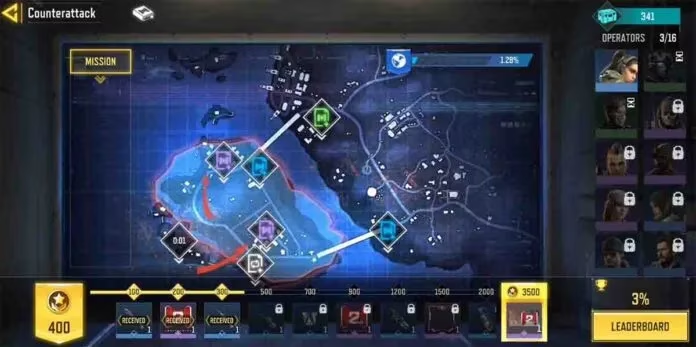
The Counterattack event was built around a simple, compelling premise: the Five Knights had occupied the isolated Blackout region, and it was the player’s job to assemble a team of operators to push back. This wasn’t done through cutscenes or a separate menu; instead, 13 unique NPC operators were scattered across the Blackout map, each waiting with a specific assignment. Recruiting them felt like collecting chess pieces in a high-stakes game where every move mattered. Some pieces were pawns—easy to grab but essential for holding the line—while others were rooks and bishops, demanding risky side quests under the pressure of an ever-shrinking safe zone.
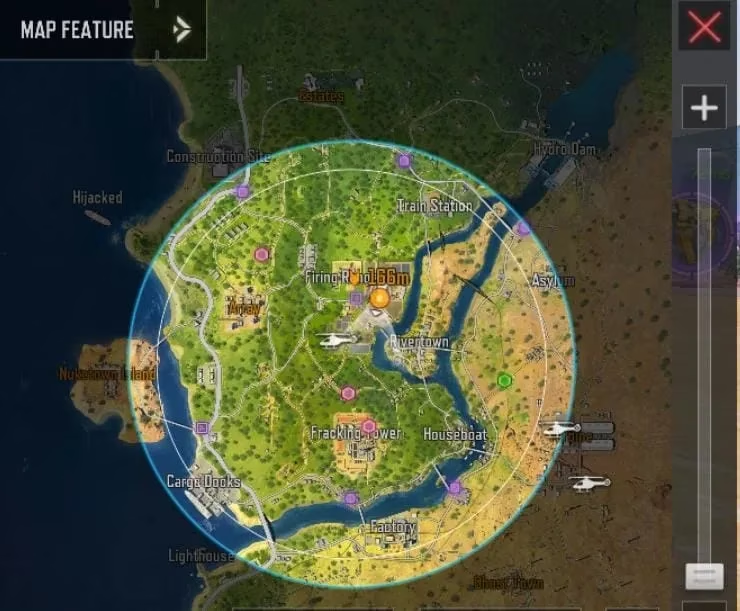
From the moment a player dropped into Blackout, a yellow indicator on the minimap would pulse whenever they were near an operator. The operators had color-coded skill tiers (green, blue, purple), and their tasks ranged from simple fetch missions to high-speed driving challenges. For instance, Ghost lurked at the Construction Site, tasking players with wingsuit flights through three COD Mobile symbol holograms—a test of aerial grace. Alias, standing nearby, demanded a 2-minute muscle-car sprint while keeping the vehicle’s health above 90%. This assignment was like balancing a porcelain vase on the hood of a drag racer; one wrong turn into a gunfight would shatter the objective.
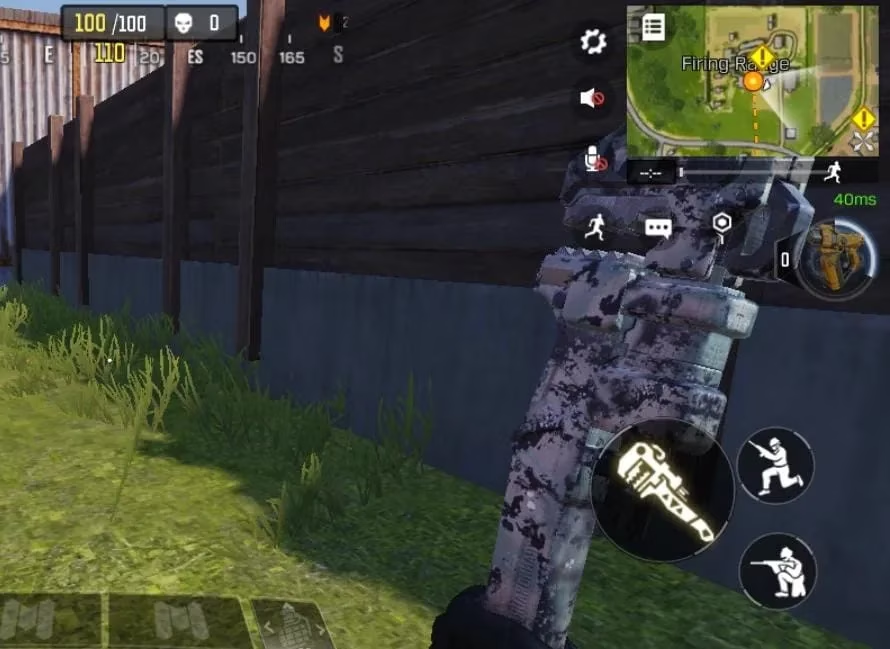
Other operators offered a puzzle-box layer to the mission. Urban Tracker near Firing Range asked for five supply boxes to be marked within ten minutes, forcing the player to scan the environment like a hawk searching for shimmering prey. Merc 5 in Ghost Town and Scylla at the gas station were quartermasters at heart, requesting specific ammunition and armor plates—lists that turned looting into a precise scavenger hunt. Meanwhile, Captain Price, ever the stoic commander, waited at the Train Station with another muscle-car challenge, mirroring Alias’s task but set against the rhythmic clank of railway tracks.
What made Counterattack so addictive was its structure as a meta-game layered on top of battle royale. Each successful task rewarded Honor points, advance the meta-progression track, and unlocked free seasonal rewards. But the real magic was assigning the recruited operators to turn-based missions from the event’s main screen. This felt like orchestrating a symphony where every musician had a distinct instrument. A team mission might require three operators of different colors, and their success depended on their individual skills plus a dash of luck. Sending a purple-tier operator to a critical offensive could yield bonus Honor, while a green-tier grunt might only just scrape by.
From a tactical perspective, the Counterattack event was a masterclass in time management. The tasks were divided into individual and team categories, and some were brutally time-limited. The Drag Race tasks, for example, rewarded players who stuck to the roads and avoided combat, treating the muscle car like a glass swan in a room full of sledgehammers. The flight training missions, handed out by Manta Ray and Adler, required navigating ejection device paths that were trickier than threading a needle during an earthquake. Alex and Urban Tracker’s supply-box marking missions were easier, but doing them alone in squads required silent cooperation or a well-coordinated split.
By the time a player had recruited all 13 soldiers—starting with the default operators Special Ops 1, Seraph, and Rosa—they’d have a small army. The final trio of tasks, given by Charly, Domino, and the last sniper challenge, were combat-focused: kill enemies with shotguns, marksman rifles, and sniper rifles, with the required body count scaling based on squad size. Completing these turned raw firefight skill into the last key that unlocked the full roster.
Looking at Counterattack from the vantage point of 2026, it stands as a testament to how a limited-time event can be more than a checkbox grind. It was a 4D chess match incorporated into the familiar rhythm of battle royale, where every operator was a living clue on a treasure map. While the event itself is long gone, its DNA lives on in Call of Duty Mobile’s subsequent seasonal challenges. Players who experienced it still reminisce about those chaotic races to Hydro Dam or the tension of marking supply boxes under enemy scopes. It’s a reminder that even in a five-year-old FPS, the right design can make an entire sandbox feel like a narrative thread pulled tight across the battlefield.