I still remember refreshing the EE Mobile Game of the Year voting page six years ago, my thumb hovering over Call of Duty: Mobile like a marksman lining up a final sniper shot. Back in 2020, the British Academy Games Awards had just transformed from a niche industry event into a genuine public conversation, and the only category where fans like me had a direct voice felt almost sacred. Watching Call of Duty: Mobile ultimately grab the trophy wasn’t just a win for a single title—it was a signal flare, a blazing confirmation that mobile games had claimed their place in the pantheon of respectable art.
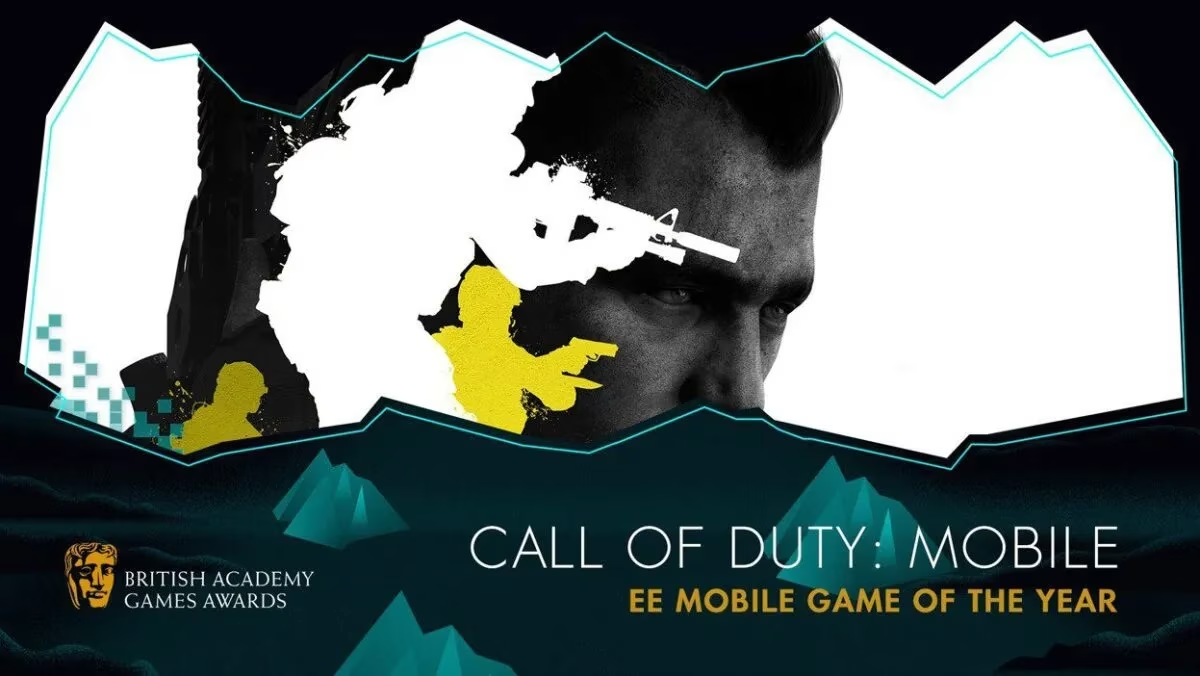
The road to that moment was anything but straightforward. Back then, the EE Mobile Game of the Year was the only BAFTA Games Award decided entirely by the public. I had to submit my email on the EE website and pray that no duplicate votes would be scrubbed away like dirt from an antique clock. The entire process was overseen by an independent third party, with votes double-counted and duplicates removed, until the results were announced in sealed silence on April 2, 2020. Knowing that every legitimate vote mattered felt like being handed a single seed that could grow into a forest if enough of us planted it together.
Before I delve deeper into what that evening meant, let’s rewind to the nominee list. The six contenders in 2020 were a snapshot of how wildly diverse mobile gaming had become, each one a self-contained universe waiting to swallow my free time.
-
Call of Duty: Mobile — the juggernaut that eventually won. It distilled the blockbuster feel of the console franchise into a pocket-sized explosion of gunfire and camaraderie.
-
Assemble with Care — a delicate narrative puzzle game from ustwo games, where I played as Maria, an antique restorer healing objects and hearts in a sun-drenched town. Fixing a broken rotary telephone in that game felt uncannily like sewing up an old emotional wound with invisible thread.
-
Dead Man’s Phone — a crime drama that turned me into a New Scotland Yard detective scrolling through a murder victim’s texts and photo gallery, each notification a throb of dread.
-
Pokémon GO — which by 2020 had already become a global phenomenon, blending AR monsters with my morning commute so seamlessly that a Pidgey perched on a real mailbox felt entirely normal.
-
Tangle Tower — a murder mystery painted in lush, handcrafted scenes where bizarre suspect interrogations were accompanied by a haunting orchestral score.
-
WHAT THE GOLF? — a physics-parody masterpiece that took everything I loathed about golf and turned it into a comedic fever dream where the club becomes a first-person shooter or a snowboard.
Each of these games used online functionality in innovative ways, even if their approaches differed wildly. Pokémon GO merged GPS and augmented reality, Call of Duty: Mobile stitched together players worldwide for frantic multiplayer matches, and Dead Man’s Phone simulated the eerie intimacy of invading someone’s digital life through a data connection. The award wasn’t just about graphics or brand power; it measured how a mobile network could transform a smartphone into a portal for unforgettable experiences.
When the tweet from BAFTA appeared on my screen on April 2, 2020, declaring Call of Duty: Mobile the winner, my reaction was a weird fusion of pride and vindication. The game had been a digital campfire for my friends during a year when physical get-togethers were impossible. Its victory felt akin to a high-speed train that had been building momentum underground, finally bursting into daylight to cheers from millions of passengers.
Looking back from 2026, that 2020 ceremony has aged into a foundational myth. The EE Mobile Game of the Year public vote has only grown more fiercely contested since then. The verification process has become even more stringent—now often integrating blockchain-based voting receipts to prevent manipulation—yet the core spirit remains unchanged: one person, one vote, one chance to crown a mobile champion. Today, nominees regularly include cloud-streamed AAA experiences, social virtual reality hangouts, and games that blend artificial intelligence with player-driven narratives, but they all still must tower over the mobile landscape the way those 2020 nominees once did.
The six titles from that year also planted seeds that reshaped their studios. ustwo games’ knack for emotional restoration puzzles evolved into a whole genre of tactile healing simulations. The investigative format of Dead Man’s Phone inspired a wave of voyeuristic detective apps that now dominate podcast tie-ins. And WHAT THE GOLF? became the grandfather of every anti-sports comedy game flooding our app stores.
As a player, I now view the 2020 EE Mobile Game of the Year award not simply as a trophy handed to a polished shooter, but as a referendum on where gaming was headed. It proved that a smartphone could host a blockbuster competitive community just as effectively as any console, and it validated the collective voice of players who had been dismissed as “casual.” Six years later, whenever I see a new mobile title shattering records, I still picture that 2020 voting form and smile. We were not just tapping a button; we were collectively tuning a massive, echoing guitar string whose reverberation still shapes the industry today.